Where budget furniture usually cuts corners
The most common shortcuts are MDF or particleboard cores under a wood veneer, thinner panel thickness, and glued (rather than joined) frame construction — all of which fail faster under daily use.
What's safe to save on
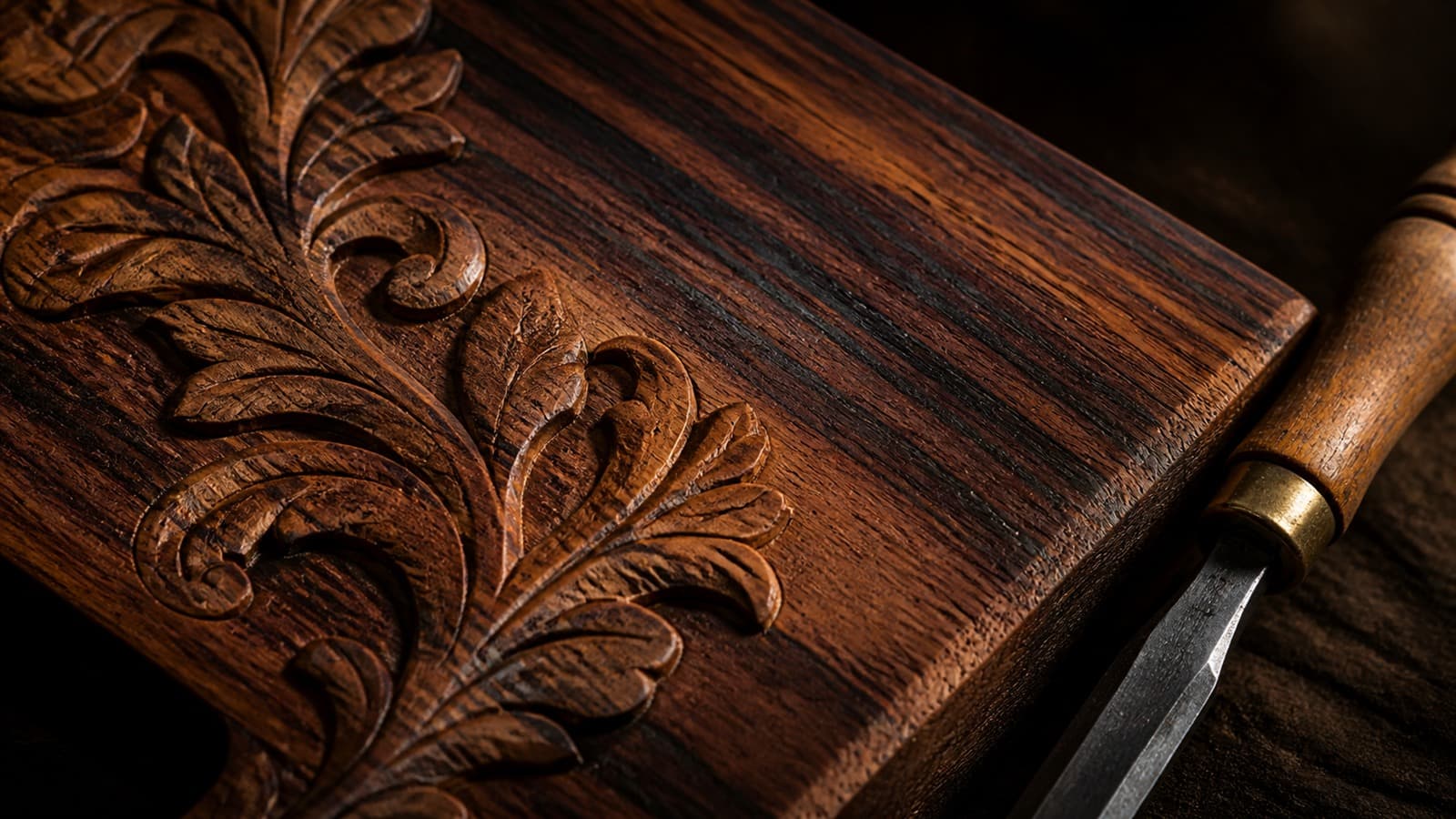
Carving depth, mirror size, and finish sheen are mostly cosmetic — a simpler carved bed frame in solid sheesham will outlast a heavily carved veneer piece, even though it looks less elaborate on day one.
What's not worth saving on
Frame material and joinery. A solid wood frame with proper joints costs more upfront but avoids the sagging, creaking, and cracking that MDF frames develop within a year or two of regular use.
Smart ways to lower cost without lowering quality
Choose a smaller size (queen instead of king, 3-door instead of 4-door wardrobe), pick a simpler carving pattern, or order in off-peak months when workshop schedules are lighter and lead times shorter.
Buying secondhand or ex-display pieces
If genuinely solid wood, a well-maintained used piece can be excellent value — check joints for looseness and look underneath for water damage before buying.
How to verify quality before you commit
Ask for a photo of the underside/back of the piece (unfinished areas reveal the real material), and ask directly whether it's solid wood or veneer — a legitimate seller will answer plainly.