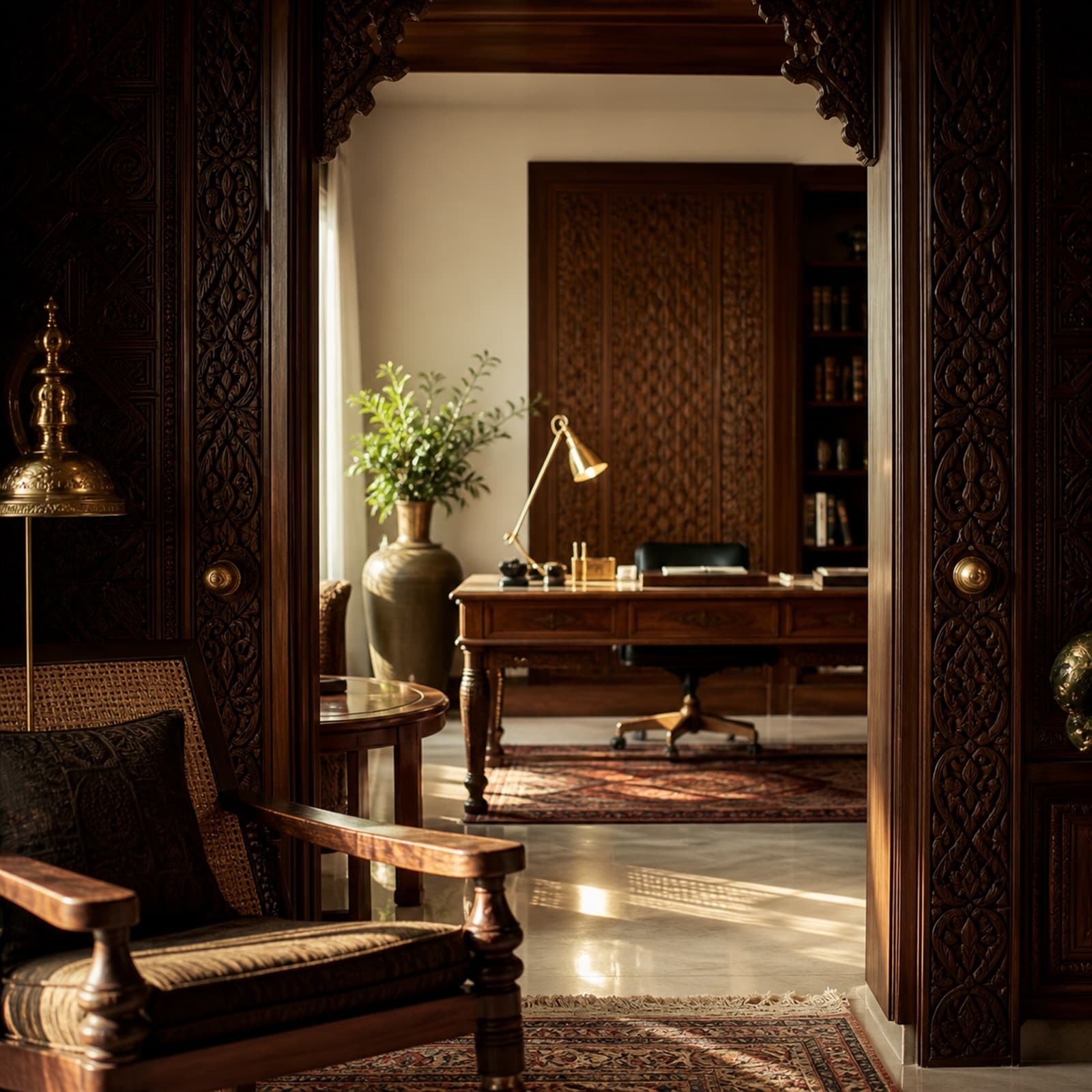
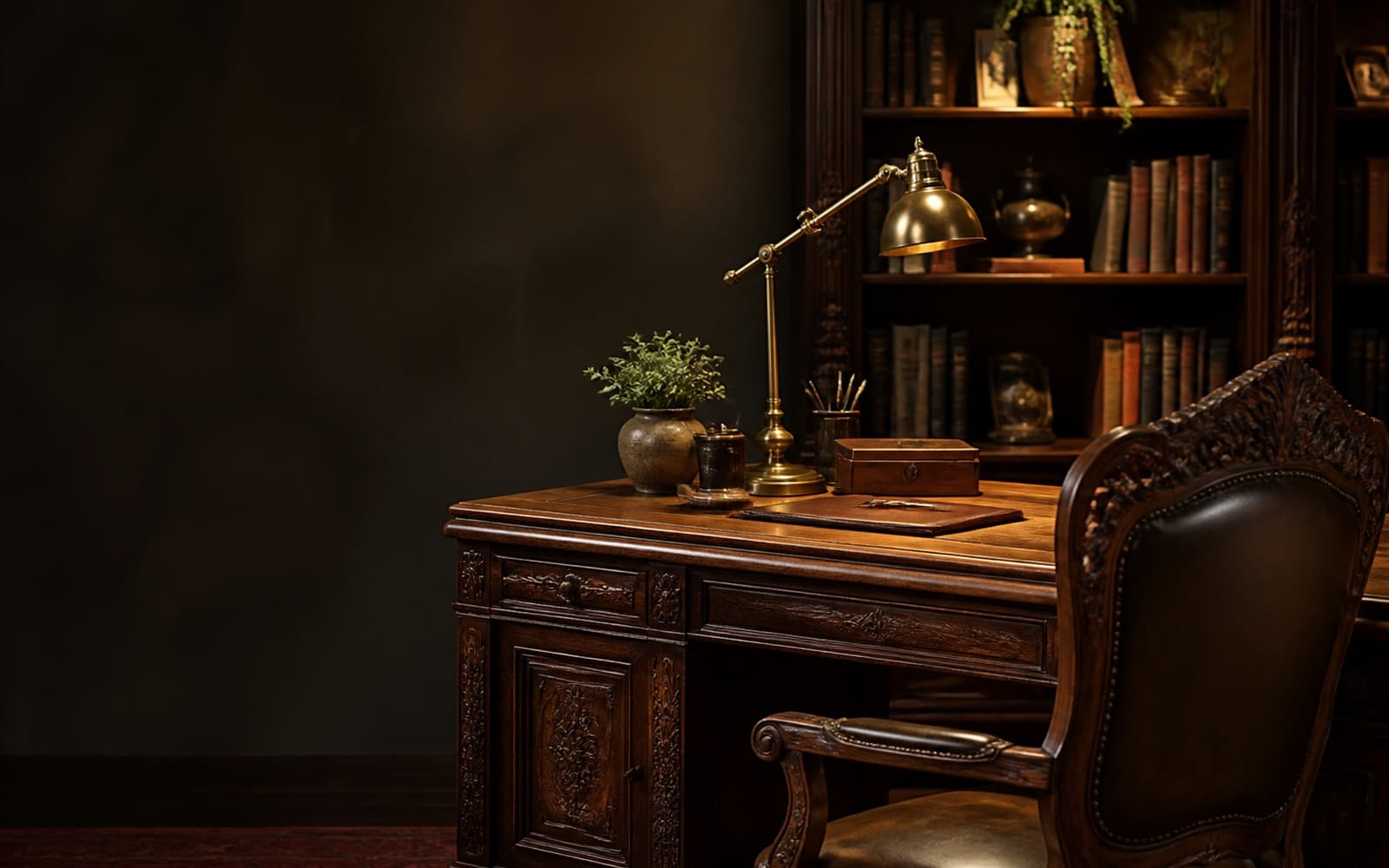
Pick a desk that fits your actual work
A 4-5 foot executive desk suits most home offices with a monitor and paperwork; if you regularly host video calls or need dual monitors, size up to a wider desk to avoid a cramped setup.
Chair height and desk height need to match
When seated, forearms should rest roughly parallel to the desktop. If a desk is on the taller side, pair it with a chair that has height adjustment rather than a fixed-height option.
Position the desk relative to light sources
Place the desk perpendicular to windows rather than directly facing them, to avoid screen glare during the day — a common issue in Islamabad homes with large windows.
Closed storage keeps a home office feeling like a room, not a workspace
A cabinet with doors (rather than open shelving) lets you close off files and equipment at the end of the day, which matters if the office shares space with a guest room or lounge.
Add a side table or credenza for equipment
Printers, scanners, and extra monitors are easier to manage on a separate side unit than crowding the main desktop.
The mistake to avoid
Don't choose a desk purely for looks without checking drawer depth — shallow drawers can't hold standard A4 files, which becomes a daily annoyance.
Keep the wood tone professional
For home offices used in video calls, a natural or walnut polish finish reads better on camera than very dark, heavily carved detailing, which can look busy on screen.