
What 'handmade' actually means here
Handmade doesn't mean every cut is done without machinery — it means the joinery, carving, and finishing are done by trained artisans who adjust for the specific piece of wood in front of them, rather than a fully automated process producing identical, mass-manufactured units.
Joinery is the real difference
Factory furniture, especially lower-cost ranges, often relies on screws, brackets, and glued panel joints. Traditional Chinioti joinery uses interlocking wood joints that distribute weight and stress more evenly, which is a large part of why solid wood furniture lasts decades rather than years.
Carving detail can't be fully automated
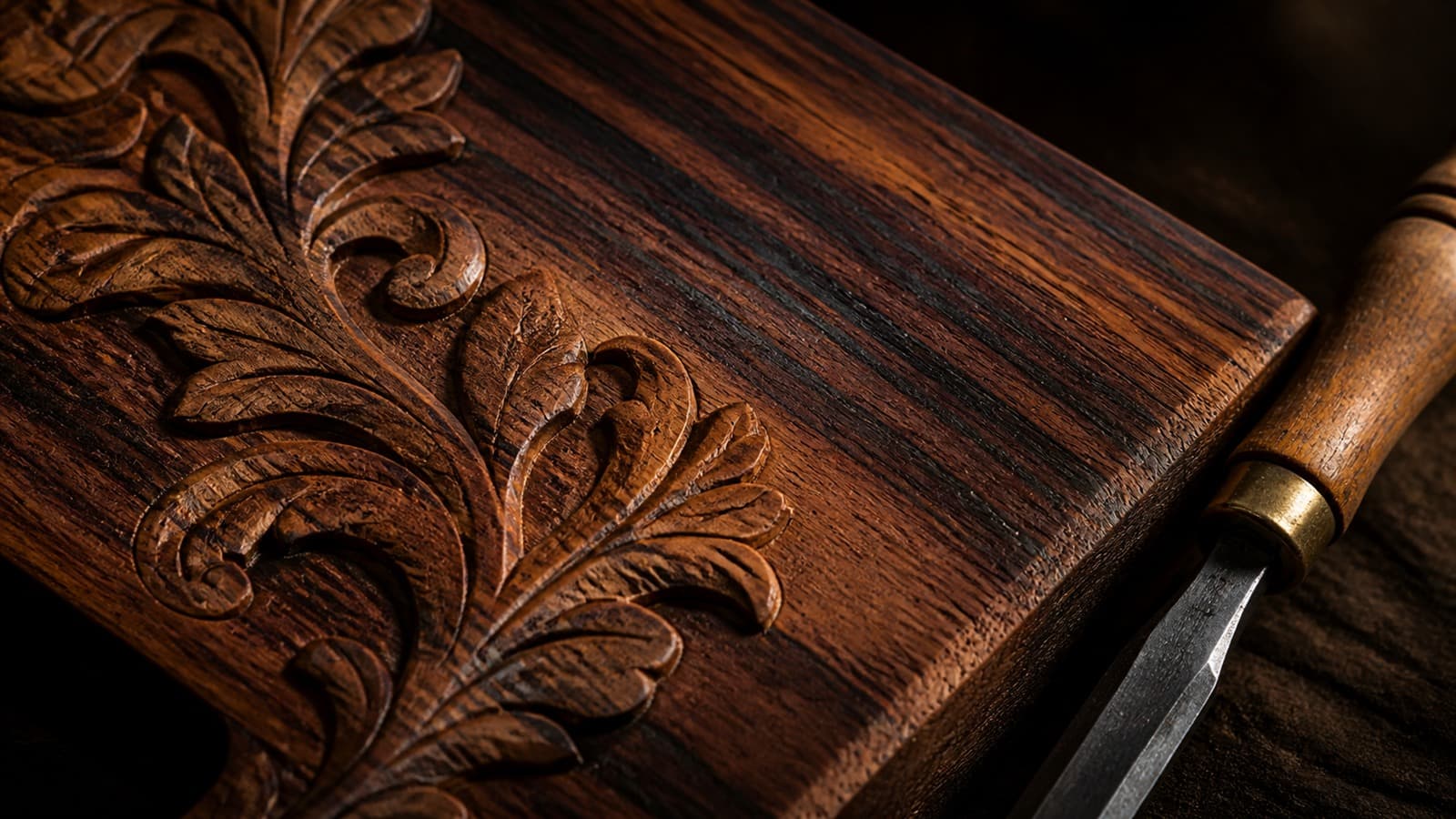
Deep hand-carving — the kind associated with Chinioti furniture — is still largely a manual skill. Machine-routed 'carved-look' furniture typically has shallower, more uniform detailing that doesn't hold up to close inspection the same way.
Where the cost difference actually goes
The price gap between handmade and factory furniture mostly reflects labor time (carving and joinery take hours per piece, not minutes) and material (solid wood costs more than MDF or particleboard) — not markup for its own sake.