
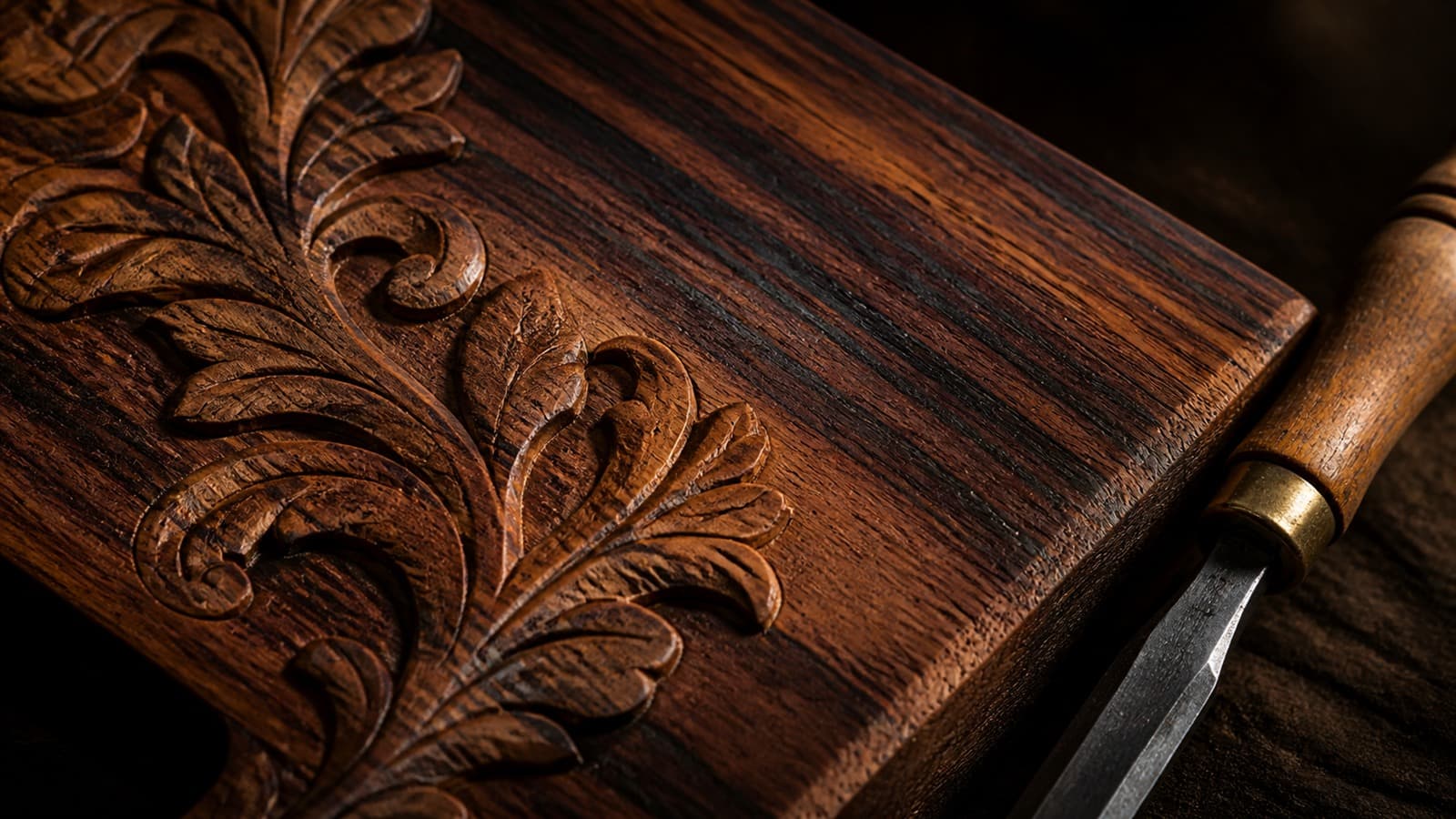
Why sheesham resists termites better than most woods
Sheesham's natural oils and dense grain make it significantly less attractive to termites than pine, rubberwood, or MDF. It's one of the reasons it's the standard choice for Chinioti furniture, but 'more resistant' isn't the same as 'immune.'
Keep furniture off damp, bare floors
Termites are drawn to moisture. Avoid placing wooden furniture directly on unsealed concrete or damp ground-floor tiles for long periods — a rug, mat, or raised base underneath reduces direct ground contact.
Control indoor humidity
High, sustained humidity attracts termites and other pests. Good cross-ventilation, and a dehumidifier in poorly ventilated storage rooms during monsoon months, makes a real difference.
Inspect regularly, especially legs and undersides
Check furniture legs, the underside of beds, and the back of wardrobes every few months for small exit holes, fine wood dust, or mud tunnels — early signs of termite activity that are much easier to treat before they spread.
If you spot termite activity
Isolate the affected piece from other wooden furniture immediately and call a licensed pest control service — DIY sprays rarely reach an established colony. Solid sheesham pieces can usually be treated and saved if caught early.